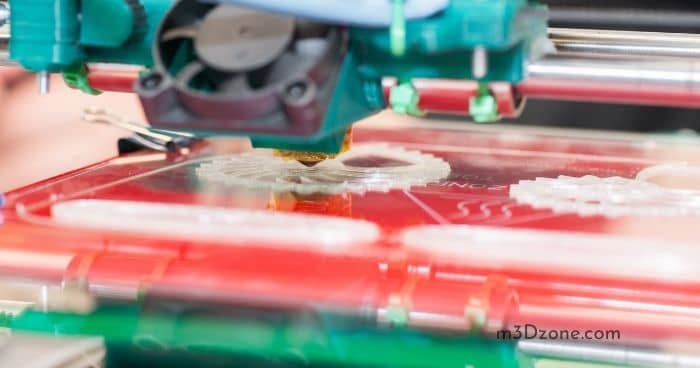
PVA filament is a biodegradable polymer that remains sensitive to moisture. Comes as a support material and its chemical properties make it soluble.
Curios how does a 3D pen work? We've got you covered. A 3D pen employs the same techniques used in most 3D printing devices. It heats the plastic filament...
3D printing infill facts. The infill density determines the final strength of the printed object. It influences the quantity of the filament, printing time...
What is TPU filament? It originates from a class of polyurethane plastics with important features such as high elasticity, transparency, and resistance to...
Yes, you can use the same filament for a 3D Pen as you use in a 3D printer. Consider the project you are working on and also the type of pen you are using.
Fused Deposition Modeling(FDM) and Fused Filament fabrications (FFF) are the same. The FDM or FFF uses additive manufacturing 3D printing technology.
Food safe coating for 3D prints. What are they? A food-safe coating is critical for manufacturing 3D models ensuring that the food they handle remains safe.
Installing Klipper on your FLSUN Super Racer printer isn’t as straightforward as any old computer-based installation, so if your experience with 3D printing and firmware ...
TPU printing temperature: You shouldn't use TPU material on heated glass bed temperatures of more than 60 degrees Celsius. See inside the proper settings.
Nylon vs PETG. In general, Nylon is a more versatile filament than PETG. However, PETG offers superior resistance to heat, moisture, and chemicals. See more!
PLA and ABS are 3D materials with unique benefits and drawbacks. Let's dive deep into PLA vs ABS 3D printing differences and see which is better for you & why.
In simple words, 3D Printing is the process of making 3D models using 3D printing devices. With an HQ 3D printer, you will be able to create 3D models rapidly.